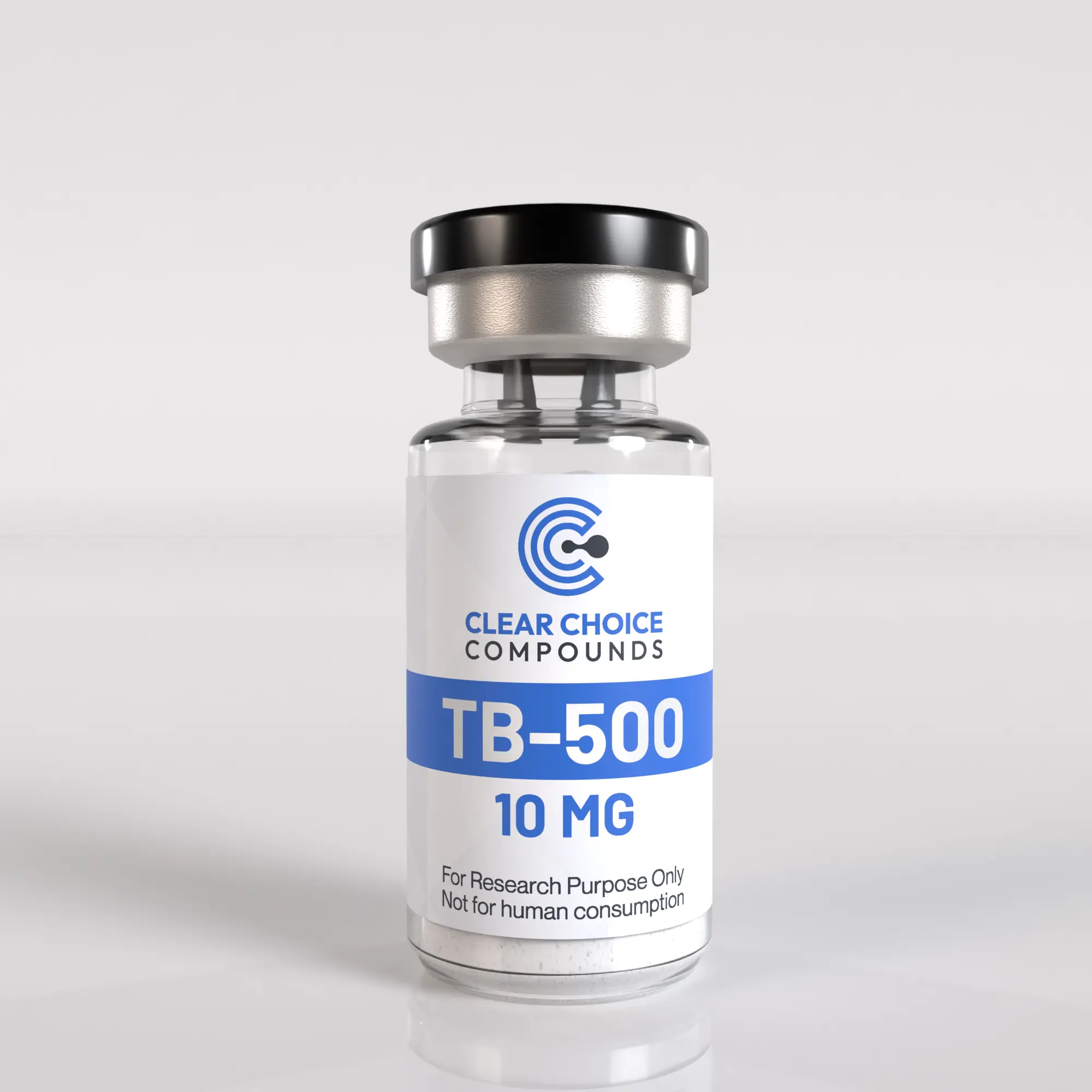
TB-500 10MG
TB-500 is a synthetic peptide sequence designed for research applications. This product is intended exclusively for use in scientific and academic investigations, including cell culture studies, biochemical experiments, and related biochemical research. TB-500 is a 50-amino acid peptide that has been explored in studies for its potential effects on cell repair mechanisms, particularly in the context of tissue regeneration, wound healing, and extracellular matrix remodeling.
Research Context
TB-500 was first discovered in the 1990s during research on the thymosin beta-4 protein. Thymosin beta-4 is naturally present in mammalian cells and has been extensively studied for its role in reducing inflammation, promoting cell survival, and facilitating repair processes. Synthetic TB-500 is derived from this native peptide and has been utilized in numerous in vitro and in vivo studies to investigate its biological activities under controlled research conditions.
Due to its structure and properties, TB-500 has garnered interest among researchers for its potential applications in studying cellular regeneration, tissue engineering, and the development of novel therapeutic strategies. However, its use is strictly limited to research environments to ensure compliance with regulatory standards and ethical guidelines.
Research Overview
TB-500 has been studied extensively in laboratory settings for its ability to promote cell migration, reduce oxidative stress, and modulate extracellular matrix dynamics. In vitro experiments have demonstrated its efficacy in enhancing cell survival and preventing apoptosis in various cell types, including fibroblasts, keratinocytes, and cardiomyocytes. In vivo studies have explored its potential role in accelerating wound healing, improving tissue regeneration, and mitigating inflammatory responses in animal models.
Ongoing research continues to refine our understanding of TB-500’s mechanisms of action, particularly in relation to its interaction with the actin cytoskeleton and its role in cellular remodeling. This peptide has also been examined in contexts such as neurodegenerative disease models, cardiac repair, and skin regeneration, though these studies remain exploratory and are not indicative of human therapeutic use.
Key Research Focus Areas
- Cell migration and extracellular matrix remodeling: TB-500’s ability to influence cell behavior in the context of tissue repair and regeneration.
- Reduction of oxidative stress and inflammatory responses: Potential application in preventing cellular damage and promoting healing.
- Wound healing and tissue regeneration: Exploration of its role in accelerating recovery in experimental models.
- Cardiovascular research: Investigation of its effects on myocardial repair and vascular function in animal studies.
- Neurological and neurodegenerative models: Preliminary studies examining its effects on neuronal survival and repair mechanisms.
Important Compliance and Safety Note
This product is intended solely for use in accredited research institutions, academic laboratories, and other scientific endeavors where its application is authorized. TB-500 10MG is not intended for human or animal consumption and should only be utilized under the direct supervision of qualified researchers. Proper handling, storage, and documentation procedures must be followed in accordance with applicable laboratory safety protocols and institutional guidelines.
Researchers must adhere to all regulatory requirements governing the use of peptides and biological materials, including those related to biosafety, documentation, and ethical standards. Any deviations from these guidelines may result in legal, ethical, or institutional repercussions. Always ensure compliance with local, national, and international regulations governing research substances.
Final Disclaimer
For research use only. Not for human or animal consumption. This product is not intended to diagnose, treat, cure, or prevent any disease. Research results should be interpreted with caution and within the context of experimental conditions. Results may not translate directly to clinical applications and should not be inferred for therapeutic or consumer purposes.


Reviews
There are no reviews yet.