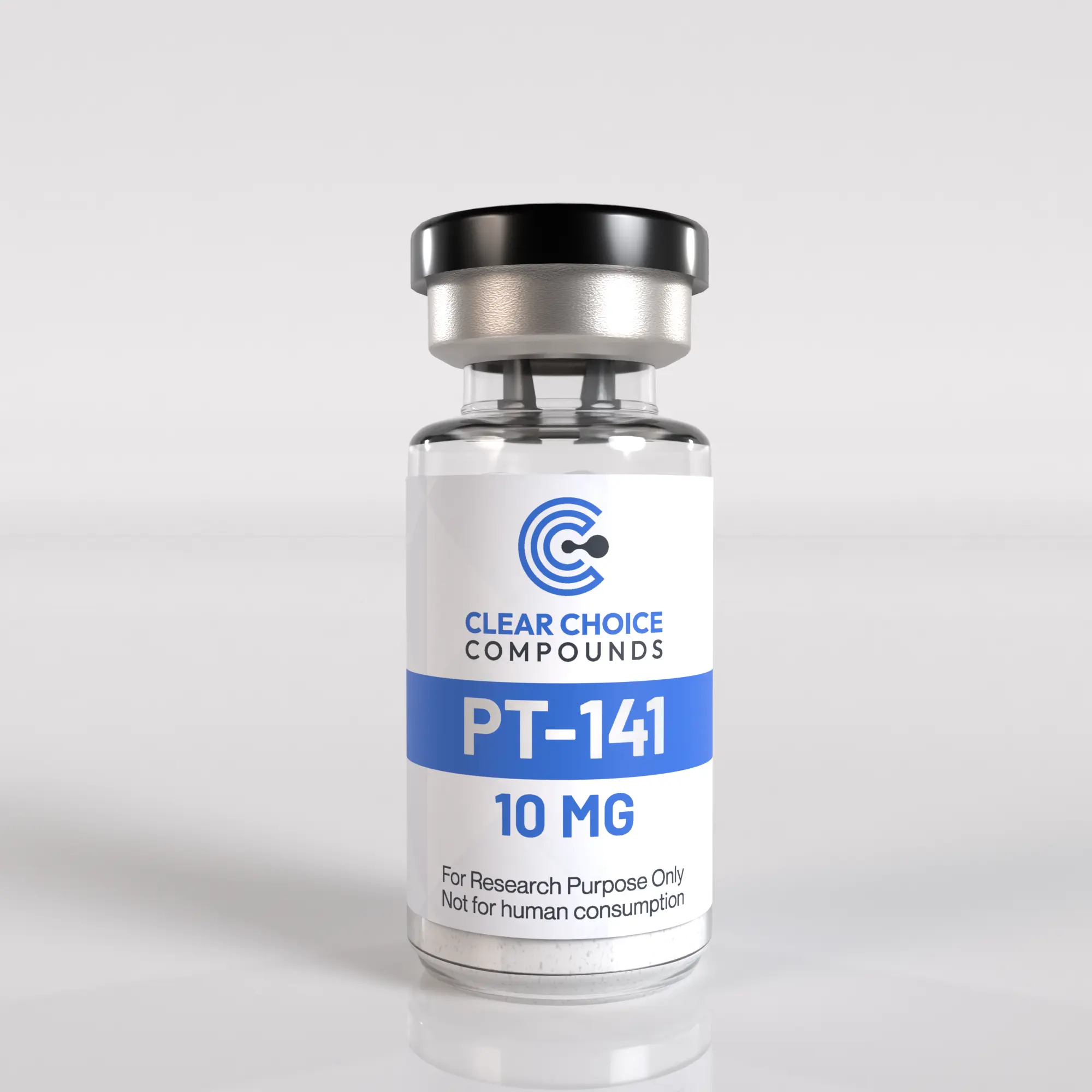
PT-141 10MG – Research-Use-Only Peptide
PT-141 is a synthetic decapeptide derived from the kisspeptin-10 neuropeptide system. Known for its potential effects in the research context, this compound is specifically formulated for laboratory studies. PT-141 has garnered significant attention within academic and scientific communities for its potential roles in reproductive biology and neuromodulation. Below, detailed information regarding its chemical properties, research applications, and considerations in a controlled research setting are provided.
Research Context
PT-141 is part of a broader class of molecules that modulate reproductive functions, particularly related to the GnRH (gonadotropin-releasing hormone) pathway. The kisspeptin system plays a crucial role in the regulation of reproductive hormones, and PT-141 has been engineered to mimic natural kisspeptin activity. Research studies have indicated that PT-141 may induce ovulation and other reproductive responses in animals, particularly in rodent models. This peptide is frequently used in studies investigating reproductive endocrinology, fertility mechanisms, and potential therapeutic interventions for reproductive disorders.
Research Overview
PT-141’s structure and mechanism of action are designed to interact with GPR54 receptors, which are critical for the proper functioning of the hypothalamic-pituitary-gonadal axis. Early research in rodent models has demonstrated its efficacy in stimulating reproductive processes, such as ovulation. While PT-141 remains an investigational compound in many areas, its utility in controlled laboratory settings has been well-documented in scientific publications, often as a research tool to explore reproductive physiology and potential pharmacological applications.
Key Research Focus Areas
- Reproductive Endocrinology: Investigation of PT-141’s effects on ovulation, folliculogenesis, and reproductive hormone signaling in animal models.
- GnRH System Modulation: Studies examining the peptide’s role in modulating the kisspeptin-GnRH pathway and its implications for reproductive function.
- Pharmacological Research: Exploration of PT-141’s potential as a research tool for studying reproductive disorders, including polycystic ovary syndrome (PCOS) and infertility mechanisms.
- Neuromodulation Studies: Research into PT-141’s impact on central nervous system-mediated reproductive behaviors and physiological responses.
- Comparative Physiology: Application in comparative studies to understand reproductive biology across species.
Important Safety and Compliance Notes
PT-141 is intended for use exclusively within a controlled research environment. This compound is not approved for human or animal therapeutic use. Due to its potential biological activity, PT-141 should only be handled and utilized by qualified researchers in accordance with established laboratory protocols and safety guidelines. Proper documentation, record-keeping, and adherence to institutional review board (IRB) or ethics committee guidelines are mandatory for research involving PT-141.
Potential risks associated with PT-141 include unexpected reproductive effects in experimental subjects, as well as unintended physiological responses due to its mechanism of action. Researchers must be vigilant in monitoring experimental outcomes and conducting follow-up studies to mitigate any adverse effects. All waste and residual materials derived from PT-141 use must be disposed of according to local regulations and institutional biohazard protocols.
| Storage Conditions | PT-141 should be stored at -20°C or lower until use. Reconstituted solutions should be stored at 4°C when possible, with use within few days. Avoid freeze-thaw cycles to prevent degradation. |
|---|---|
| Handling and Safety | Use appropriate personal protective equipment (PPE), including gloves, laboratory coats, and face protection, when handling PT-141. Ensure proper ventilation in the research area to avoid exposure to fumes or aerosolized material. |
| Regulatory Compliance | PT-141 is a controlled research reagent and must comply with all applicable laws, regulations, and institutional policies regarding the use of biologically active compounds. Consult local, national, or international guidelines for restricted substances, such as those under the Controlled Substances Act (CSA) in the United States or equivalent legislation elsewhere. |
For research use only. Not for human or animal consumption.


Reviews
There are no reviews yet.