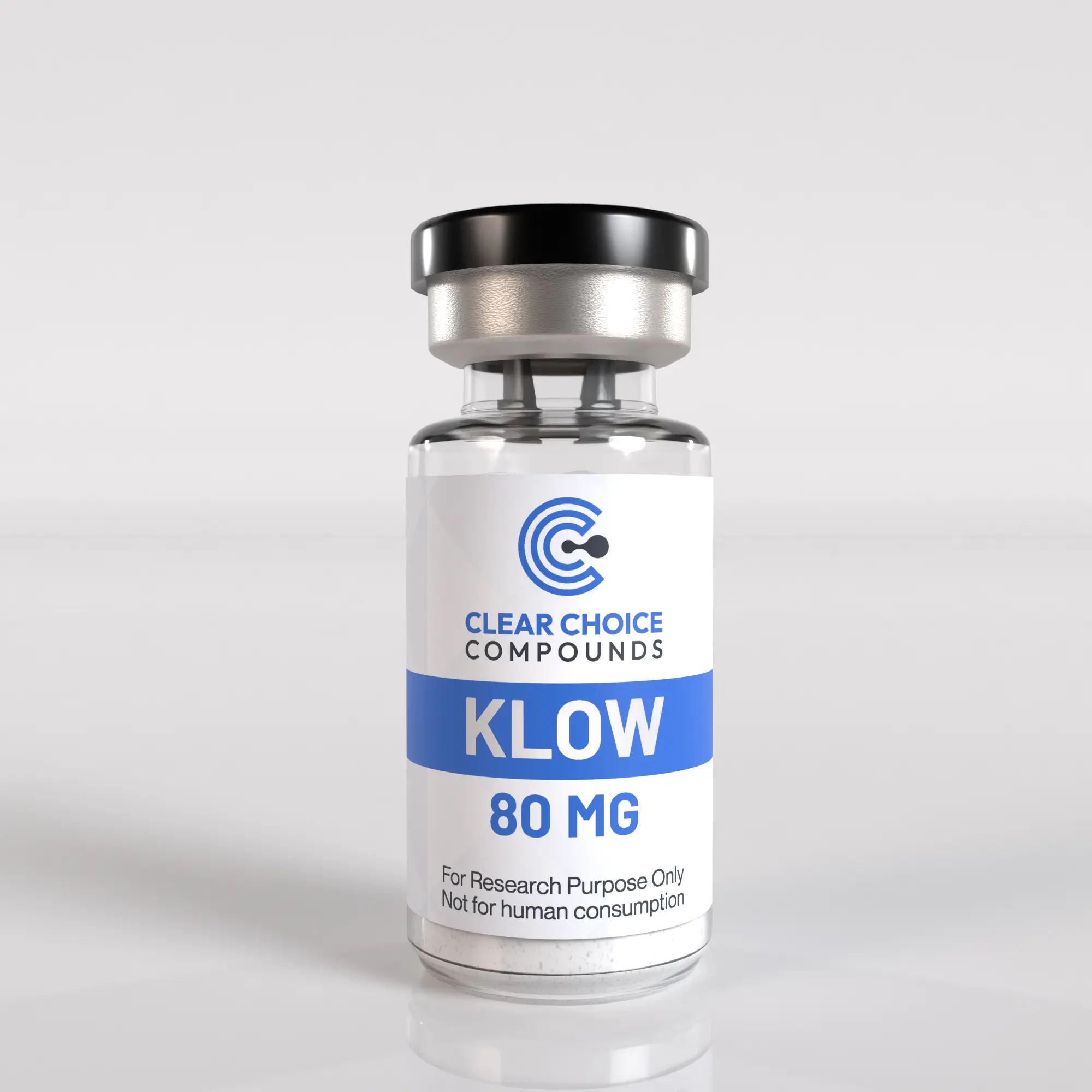
KLOW (Ketamine-Like Organic Wonders) – 80MG Research-Use-Only Peptide
KLOW is a research-only peptide derivative synthesized for scientific exploration within controlled academic or institutional research environments. This product is intended solely for use in laboratory settings to support biochemical, pharmacological, or neurochemical studies. The following information provides a detailed overview of its potential research applications and considerations based on existing scientific literature.
Research Context
Derived from ketamine-inspired molecular structures, KLOW has been studied for its potential effects on glutamate signaling, NMDA receptor modulation, and neuroplasticity. While traditional ketamine research has primarily focused on its dissociative and anesthetic properties, emerging preclinical models suggest that structurally analogous peptides may exhibit distinct behavioral and physiological outcomes. This peptide is categorized as a research tool intended for advanced experimental use, particularly in studies examining synaptic function, mood disorders, or neurobiological mechanisms.
Research Overview
KLOW is hypothesized to interact with NMDA receptor subtypes through non-competitive mechanisms, potentially influencing glutamate-mediated neurotransmission. Preclinical research in animal models has indicated that similar compounds may produce effects analogous to ketamine’s rapid antidepressant response, though these findings are speculative and not yet validated for therapeutic use. Due to its structural resemblance to ketamine, caution is warranted regarding potential off-target effects, such as psychotomimetic activity or cardiovascular modulation.
Key Research Focus Areas
- Neuroplasticity and Synaptic Function: Investigation of how KLOW modulates long-term potentiation (LTP) or depression (LTD) in hippocampal circuits, which may inform its potential role in synaptic plasticity studies.
- Glutamate Signaling Pathways: Analysis of NMDA receptor activation, particularly in relation to ketamine’s dissociative and antidepressant effects, within controlled experimental conditions.
- Behavioral and Cognitive Models: Evaluation of peptide-induced behavioral changes in rodent models of depression, anxiety, or cognitive impairment to assess behavioral phenotypes.
- Toxicological and Safety Profiling: Preclinical toxicity studies to determine metabolic stability, organ-specific effects, and potential interactions with other drugs or compounds in the research setting.
- Pharmacokinetics and Metabolism: Assessment of peptide absorption, distribution, metabolism, and excretion (ADME) in relevant biological matrices to guide experimental design.
Important Research Compliance
This peptide is strictly intended for use by qualified researchers within accredited academic or institutional research facilities. Users must adhere to all local, national, and international regulations governing experimental compounds, including but not limited to the Controlled Substances Act (CSA), Convention on Psychotropic Substances (CPS), and applicable Good Laboratory Practice (GLP) guidelines. Failure to comply with regulatory requirements may result in legal consequences.
Safety and Handling Precautions
KLOW should be handled with extreme caution, as it may exhibit properties similar to dissociative anesthetics. Proper personal protective equipment (PPE), including chemical-resistant gloves, laboratory coats, and ventilation systems, must be utilized during storage and preparation. Research facilities should implement standardized protocols for disposal, including incineration or chemical neutralization, to ensure compliance with environmental regulations.
For Research Use Only
Not for human or animal consumption. Unauthorized distribution or use is illegal and prohibited. Always consult relevant institutional review boards (IRBs) or ethical review committees prior to initiating research involving this material.






Reviews
There are no reviews yet.