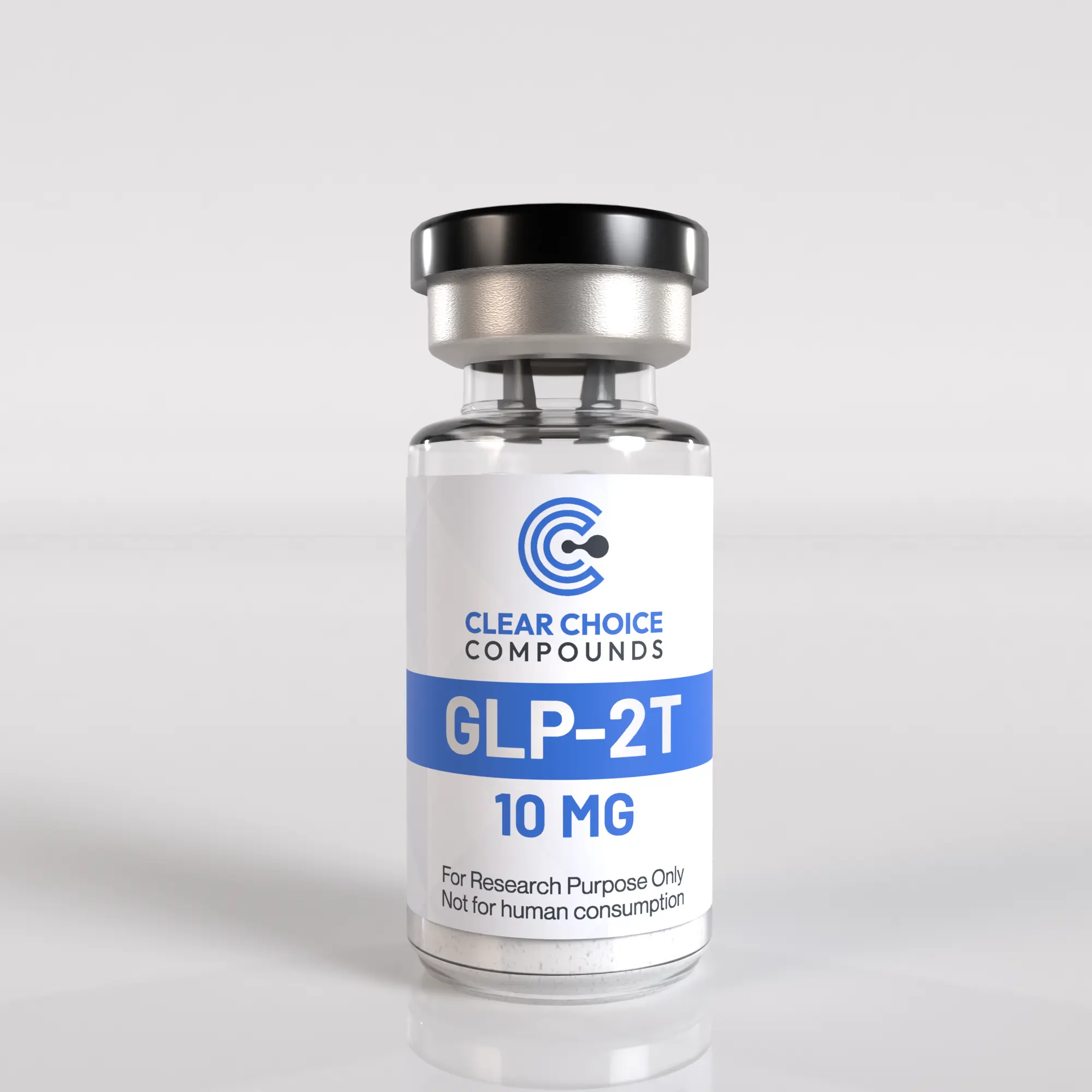
GLP-2T: A Novel Research-Use-Only Peptide Variant for Investigational Studies
GLP-2T is a modified research-use-only peptide designed for exploratory studies in preclinical research environments. This construct builds upon the well-characterized glucagon-like peptide-2 (GLP-2) peptide framework, incorporating targeted amino acid substitutions to investigate its potential effects in specific biological or pharmacologic contexts. This peptide is intended solely for academic or corporate research projects, not for therapeutic, diagnostic, or commercial applications.
Research Context
GLP-2 is a 33-amino acid hormone primarily secreted by the intestinal L-cells, playing a critical role in gastrointestinal motility, nutrient absorption, and mucosal integrity. In its native form, GLP-2 is often studied for its effects on gut physiology and as a potential therapeutic in conditions involving intestinal dysfunction. GLP-2T represents a customized derivative that may exhibit unique pharmacokinetic or pharmacodynamic properties due to its amino acid modifications, enabling researchers to probe novel mechanistic insights or test its utility in specialized biological models.
Research Overview
GLP-2T is formulated for research use in animal models or in vitro studies, where it may be administered to investigate aspects such as:
- Gut barrier function and permeability
- Neuroendocrine modulation in the gastrointestinal tract
- Pharmacokinetic stability in comparison to native GLP-2
- Potential interactions with related peptide receptors
This peptide is supplied in a lyophilized form for reconstitution, ensuring stability during storage and handling as per research protocols.
Key Research Focus Areas
-
Gastrointestinal Physiology:
GLP-2T may be evaluated for its effects on intestinal motility, water absorption, and mucosal healing in preclinical models. Researchers may assess whether the modifications alter its traditional role in promoting intestinal recovery post-injury or under stress conditions. -
Pharmacokinetics and Receptor Binding:
The substitution pattern in GLP-2T could influence its binding affinity for GLP-2 receptors (GLP-2R) or other related receptors, such as glucagon receptors. Investigators may use this peptide to characterize its clearance rate, tissue distribution, and potential for off-target interactions. -
Neuroendocrine Effects:
GLP-2T may be administered to explore its impact on vagal signaling, enteric nervous system activity, or central nervous system pathways influenced by GLP-2 signaling. Studies could examine its role in conditions like gastrointestinal disorders or metabolic regulation. -
Safety and Toxicity Profiling:
Preclinical toxicology assessments may be conducted to evaluate the peptide’s safety profile, including potential adverse effects on cardiovascular, renal, or endocrine systems. Researchers may compare GLP-2T’s effects to those of native GLP-2 or other peptide analogs.
Important Compliance and Safety Remarks
GLP-2T is intended exclusively for research purposes and is not authorized for human or animal consumption. Its use must adhere to all applicable regulatory guidelines, including but not limited to, the following:
- Compliance with institutional review boards (IRBs) or animal care committees
- Adherence to Good Laboratory Practice (GLP) standards
- Proper documentation and record-keeping for all research activities
This peptide should be handled with sterile techniques, stored at temperatures specified for peptide stability, and disposed of according to biohazard protocols. Researchers must ensure that all experimental protocols are ethically approved and conducted in accordance with local legislation.
For research use only. Not for human or animal consumption.
| Size | 10MG, 15MG, 20MG, 25MG, 30MG, 40MG, 50MG, 60MG |
|---|





Reviews
There are no reviews yet.