All orders placed by 2pm EST will be shipped same day Free Shipping Over $150 Gift With Every Order All orders placed by 2pm EST will be shipped same day Free Shipping Over $150 Gift With Every Order

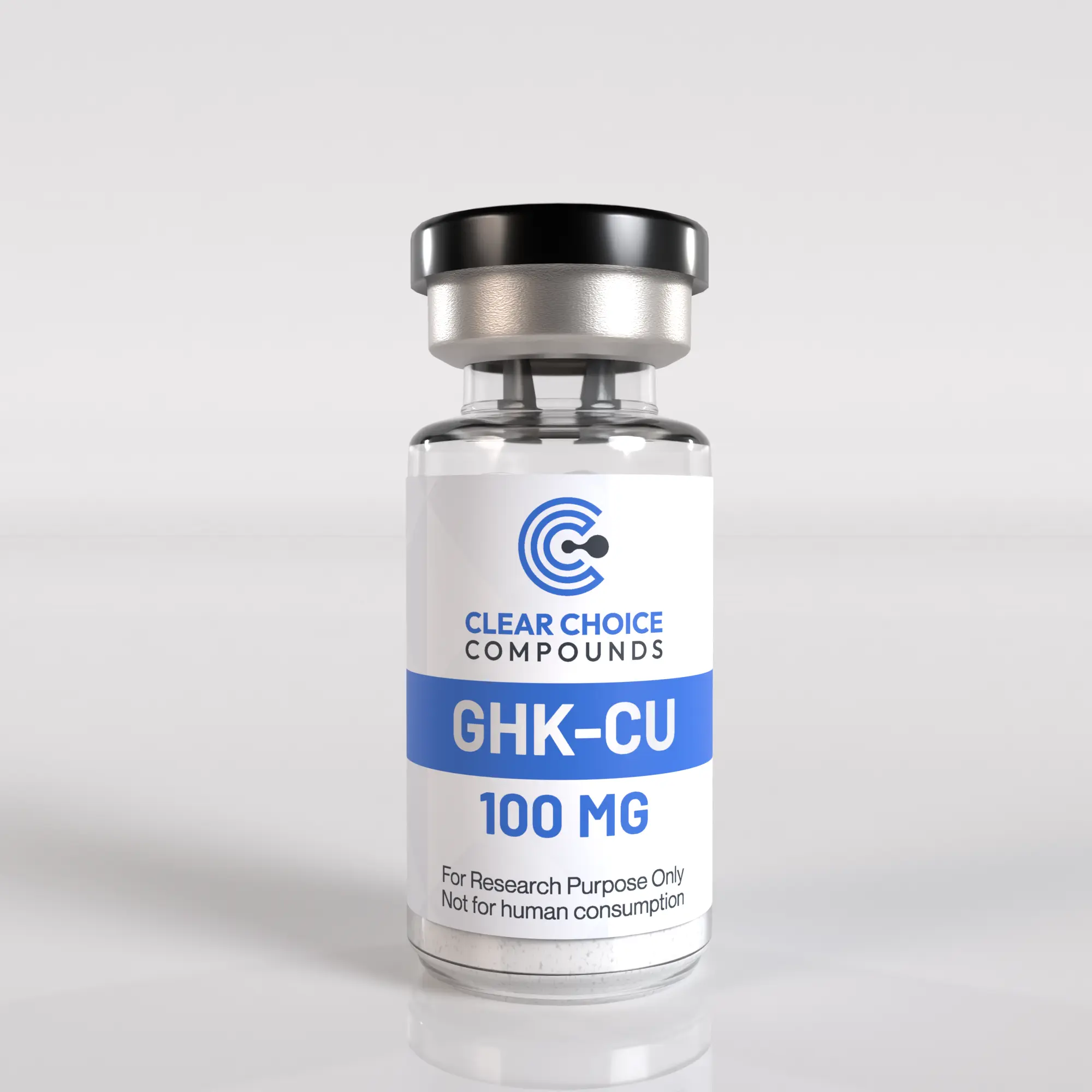
GHK-CU 100MG

Categories:

GHK-CU 100MG is a research-use-only peptide designed for laboratory applications. This compound consists of the tripeptide glycine-histidine-l-lysine conjugated to a copper-chelating unit. GHK-CU is widely studied in scientific research for its potential biochemical properties. For research use only.

$47.00

ℹ️ RESEARCH USE ONLY

For research purposes only. Not for human or animal use & not FDA-approved. By purchasing, you confirm you are 21 or older and qualified researcher

GHK-CU 100MG – Research-Use-Only Peptide

GHK-CU is a peptide-based compound synthesized as a derivative of the naturally occurring peptide ghrelin’s copper complex. This research-use-only peptide is primarily studied in the context of its potential biological interactions with cell membranes and signaling pathways in preclinical and basic science research settings.

Research Context

GHK-CU has been investigated in academic and industrial research environments as a functional molecule with potential applications in studies involving cell viability, protein synthesis, and cellular metabolism. The peptide is notable for its ability to interact with cell membranes and potentially modulate processes like receptor binding and intracellular signaling cascades. However, its role in human or animal physiology remains an area of ongoing investigation and is not yet fully understood.

Research Overview

GHK-CU is often explored in the context of its structure-function relationship, particularly in studies involving its copper coordination and effects on peptide stability. Preclinical research has focused on its behavior in various biological systems, including its potential as a tool for probing cellular processes. The compound’s synthesis and formulation are critical for its effectiveness in experimental settings.

Key Research Focus Areas

  • Cell Membrane Interaction Studies – GHK-CU is frequently evaluated for its ability to penetrate cellular membranes and interact with receptor systems.
  • Peptide Stability and Bioavailability – Research examines its structural integrity and metabolic clearance in biological samples.
  • Cellular Signaling Mechanisms – Investigations into potential modulatory effects on pathways such as mTOR, autophagy, or protein synthesis.
  • Preclinical Toxicity and Safety Profiles – Assessment of acute and chronic effects in experimental models (where applicable).
  • Copper Complex Chemistry – Understanding the role of copper coordination in peptide activity and potential modifications for enhanced stability.

This product is provided for research purposes only and is intended exclusively for academic or industrial laboratories adhering to ethical and regulatory standards.

For research use only. Not for human or animal consumption.

Reviews

There are no reviews yet.

Be the first to review “GHK-CU 100MG”

Your email address will not be published. Required fields are marked *

GHK-CU 100MG – Research-Use-Only Peptide

GHK-CU is a peptide-based compound synthesized as a derivative of the naturally occurring peptide ghrelin’s copper complex. This research-use-only peptide is primarily studied in the context of its potential biological interactions with cell membranes and signaling pathways in preclinical and basic science research settings.

Research Context

GHK-CU has been investigated in academic and industrial research environments as a functional molecule with potential applications in studies involving cell viability, protein synthesis, and cellular metabolism. The peptide is notable for its ability to interact with cell membranes and potentially modulate processes like receptor binding and intracellular signaling cascades. However, its role in human or animal physiology remains an area of ongoing investigation and is not yet fully understood.

Research Overview

GHK-CU is often explored in the context of its structure-function relationship, particularly in studies involving its copper coordination and effects on peptide stability. Preclinical research has focused on its behavior in various biological systems, including its potential as a tool for probing cellular processes. The compound’s synthesis and formulation are critical for its effectiveness in experimental settings.

Key Research Focus Areas

  • Cell Membrane Interaction Studies – GHK-CU is frequently evaluated for its ability to penetrate cellular membranes and interact with receptor systems.
  • Peptide Stability and Bioavailability – Research examines its structural integrity and metabolic clearance in biological samples.
  • Cellular Signaling Mechanisms – Investigations into potential modulatory effects on pathways such as mTOR, autophagy, or protein synthesis.
  • Preclinical Toxicity and Safety Profiles – Assessment of acute and chronic effects in experimental models (where applicable).
  • Copper Complex Chemistry – Understanding the role of copper coordination in peptide activity and potential modifications for enhanced stability.

This product is provided for research purposes only and is intended exclusively for academic or industrial laboratories adhering to ethical and regulatory standards.

For research use only. Not for human or animal consumption.
Related Products

Age Verification!

*By continuing, you confirm eligibility and legal compliance.